Who we serve · TRT Clinics
Meta Ads for TRT Clinics & Men's Health Practices.
Men don't respond to "struggling with low T?" ads — Meta doesn't approve them anyway. Men respond to provider-led storytelling about energy, body composition, and performance. A TRT Meta program is built around that shift: symptom-adjacent creative that clears review, provider presence that outpaces Hone and Hims, and a funnel built for men who've been thinking about TRT for six months.
Starting at $5,000/month · Calendly-first booking · Founder reviews every inquiry personally.
Monthly Meta-addressable TRT audience
Men 30–55
~42M men in the U.S. inside this demo per Meta's own audience reach data. The targeting question is which slice of that 42M fits your clinic's geography and patient profile.
National online-TRT Meta spend
$5M+/mo (each)
Hone Health, Hims, Roman / Ro, Maximus each spend in the single-digit to mid-seven-figure range per month on Meta — a local clinic competes on creative and provider trust, not budget
Cost per booked TRT consultation
$120–$400
wider band than hormone or med spa because geographic competition varies so dramatically; major metros with saturated online-TRT spend run higher, secondary metros run lower
Why TRT Meta is harder than it looks
You're running a local clinic against billion-dollar telehealth brands spending more per month than your annual revenue.
TRT Meta advertising has a structural problem that no other subtype in our umbrella faces. When a med spa runs a Meta campaign, it's competing against other local med spas — similar-sized businesses, similar-sized budgets, similar creative quality. When a TRT clinic runs a Meta campaign, the feed is already saturated with ads from Hone Health, Hims, Ro, Roman, Maximus, Alpha MD, and a dozen smaller online TRT brands — each of them well-funded, professionally produced, and optimized on years of Meta creative-testing data.
A local clinic that runs a standard "book a TRT consult" Meta ad in that feed is invisible. Your ad looks like the tenth variation of the same online-TRT pitch, running against brands with 20x your creative budget. The patient scrolls past. The engagement numbers crater, CPMs spike, and the program fails within 60 days.
The local clinic's advantage on Meta isn't creative polish (you can't win that race) or spend (you can't win that race either). It's provider presence and clinical depth — the things the national brands structurally can't fake. A 3-minute Reel of your actual provider explaining his approach to testosterone monitoring outperforms the most polished national-brand ad because it signals something real. A landing page that shows the in-person lab draw and the same-provider continuity does what the telehealth brands can't. Our TRT Meta practice is built around surfacing that advantage.
The second structural problem: you cannot write direct-response "low T" creative on Meta. "Struggling with low testosterone?" — personal-attribute callout, instant rejection. "Tired, unmotivated, low libido?" — personal-attribute stack, also rejected. Meta's Ads About Personal Attributes policy is strictly enforced for health-related creative. The creative has to imply the symptom awareness without directly addressing the viewer's personal attribute — a narrower line than in most verticals. We write to that line every time.

One practice, one strategy — every surface a patient touches, in sync.
— The Holistic system
What we do for TRT clinics on Meta
Provider presence, symptom-adjacent creative, and a patient-journey retargeting funnel.
A TRT Meta program has three jobs: stand out against billion-dollar online-TRT spend (via provider-led creative the national brands can't match), clear Meta's personal-attribute review (via symptom-adjacent copy, not direct callouts), and convert the long research window (via multi-touch retargeting across 60-90 days). Here's how each layer works.
//01
Provider-led creative (the local clinic's edge)
Your actual provider on camera, discussing his approach to testosterone monitoring, protocol selection, in-person labs, and patient relationships. No stock footage, no actors, no polished voice-over. Men see through the national-brand polish; they respond to provider authenticity. This is the single biggest lever for a local TRT clinic on Meta.
//02
Symptom-adjacent creative (inside Meta's personal-attribute rule)
Copy that implies the symptom awareness without directly addressing the viewer's personal attribute. "What's happening with energy in your 40s" rather than "tired in your 40s?" — same patient, different side of Meta's policy line. We write the whole creative library to clear review the first time.
//03
Energy / body-comp / performance storytelling (not before/after)
TRT has no visual transformation arc the way a med spa does — you can't show a testosterone before/after. The creative substitutes storytelling: patient-authored narratives about energy, work performance, training recovery, and family life (with appropriate disclaimers). Video format, 60-90 seconds, provider-led intros, patient-led middles.
//04
Local-advantage creative against online-TRT brands
Explicit comparison creative surfaces the in-person lab draw, the same-provider continuity, the ability to adjust protocol based on physical exam, the prescription backup when one compounded source is out of stock. Not a mean comparison — a clear one. Men comparing a local clinic to Hone / Hims should know what they're choosing.
//05
60-90 day retargeting window
TRT patients are in the consideration window for 6-12 weeks. Standard 7-day or 28-day retargeting misses most of the booking. We run 60-90 day retargeting pools with creative rotation — every 2-3 weeks a new angle, a new provider story, a new comparison point. The patient sees 8-12 touches before the consult CTA lands.
//06
Funnel attribution that ties to the intake call
Conversions API + Calendly booking + call-tracking on the intake line. We report cost per booked consult with 90-day attribution so the Meta spend is measured against the right outcome. Cost per lead (form fill) is reported but deprioritized — lead volume without booked consults is noise.
Four TRT-specific Meta patterns not in the med spa or hormone playbook
Where the generalist Meta buyer reliably gets the creative wrong.
We've watched experienced Meta buyers from e-commerce, DTC, and even from other healthcare verticals struggle on TRT accounts for the first 60-90 days. Four patterns below are category-specific — none of them transfer from med spa Meta or from ecommerce Meta, and all of them reliably separate a working TRT program from one that plateaus.
//01
"Low T" is a personal-attribute callout — Meta will reject it
The natural direct-response language for this category — "struggling with low T?" "is low testosterone slowing you down?" — all get disapproved under Meta's Ads About Personal Attributes policy. Most generalist TRT campaigns produce a pile of rejected creatives before they learn this. We start with symptom-adjacent copy on day one.
//02
Testosterone is a DEA Schedule III drug — the ad policy stack reflects that
Testosterone triggers additional Meta review, FDA marketing rules, and DEA awareness. Brand-name references (Androgel, Testim, Aveed) have specific rules. Compounded testosterone has different rules. We track all three and write to current wording — the policies update quarterly.
//03
TRT men are Reddit-native — the funnel has to acknowledge that
TRT prospects often research on r/Testosterone, r/trt, and YouTube long before they see a Meta ad. The creative that works here acknowledges that research level — talks about protocols, monitoring, labs, side effects — rather than pitching at a first-exposure reader. Creative pitched at a naïve buyer reads as beneath the audience and underperforms.
//04
The consult-to-enrollment rate is the real revenue metric
A booked TRT consult that enrolls in a protocol is worth $3,000-$8,000 annually. A booked consult that doesn't enroll is a $0 outcome. The program has to track and optimize on enrollment rate, not just consult bookings. We set intake feedback loops from day one and adjust audience and creative toward enrolled-patient conversion, not raw bookings.
TRT Meta compliance specifics
Four Meta-policy + drug-regulation surfaces TRT ads have to clear.
TRT is one of the more tightly-regulated Meta advertising categories because testosterone is a DEA Schedule III controlled substance, because it touches the Personal Health and Appearance policy, and because it has active FDA guidance on compounded-vs-approved marketing. A creative that clears one of those doesn't automatically clear the others.
Four surfaces below are where TRT Meta campaigns get rejected or flagged most often. We audit all four pre-submission, every time.
G1
Personal-attribute callouts — "struggling with low T?"
Meta's Ads About Personal Attributes policy disallows ads that directly address viewer health or physical conditions. "Low T?", "tired all the time?", "low libido?" — all reject under this rule. We write symptom-adjacent copy that implies without addressing.
G2
Brand-name testosterone product rules
Androgel, Testim, Aveed, Xyosted — FDA-approved testosterone products — have specific advertising rules including mandatory risk disclosures when named in consumer advertising. We keep brand names off ad copy and on landing pages only, with full risk disclosures.
G3
Compounded testosterone marketing rules
Compounded testosterone cannot be marketed as equivalent to FDA-approved products. The FDA has issued warning letters on this exact pattern. Our compounded-testosterone content clearly distinguishes.
G4
Controlled-substance advertising implications
Testosterone is DEA Schedule III. While Meta allows licensed prescriber advertising, the copy and landing pages must reflect that the substance is controlled, the prescriber is licensed, and the scope of prescribing respects federal and state rules.
How a TRT Meta engagement runs
Provider content → symptom-adjacent creative → launch → long-window retargeting.
The sequence leads with provider content because that's the engine — without credible provider-led video, a TRT local-clinic Meta program can't differentiate from the national brands. Then symptom-adjacent creative, then launch, then retargeting across the long consideration window.
Step 01
Discovery + competitor-ad audit
30-minute discovery plus a review of the Meta ads Hone, Hims, Ro, Roman, and Maximus are currently running in your geo (via Meta's public ad library). Output: where the national brands are dominant and where their creative has exploitable gaps.
Step 02
Provider content production
4-8 pieces of provider-led video, 60-180 seconds each, covering testosterone monitoring approach, protocol selection logic, in-person labs, and patient relationships. Phone-shot or lightly-produced; authenticity outperforms polish in this category.
Step 03
Symptom-adjacent creative library build
12-20 static + video variations built to clear Meta's personal-attribute review. Each piece pre-checked against current policy wording. Headlines, captions, and thumbnails all calibrated to the line between compliant symptom awareness and disallowed personal callout.
Step 04
Audience + funnel architecture
Geo radius + age 30-55 + broad interests. Funnel structure: top-of-funnel provider-led awareness → mid-funnel local-advantage comparison ads → bottom-funnel consult CTA. Retargeting pools structured for 60-90 day rotation.
Step 05
Launch + 30-day learning window
Small-budget test ($3k-$8k over 10-14 days) to let Meta's optimization learn. Watch CPM, CTR, landing-page conversion, cost per booked consult daily. Creative refresh starts at week 3.
Step 06
Scale + enrollment-rate tuning
Scale the winning mix, but tune on enrollment rate (consult → protocol-enrolled patient), not consult count. Feed intake team's patient-fit grading back into the audience model so Meta learns to find the patients who actually convert, not just the ones who book.
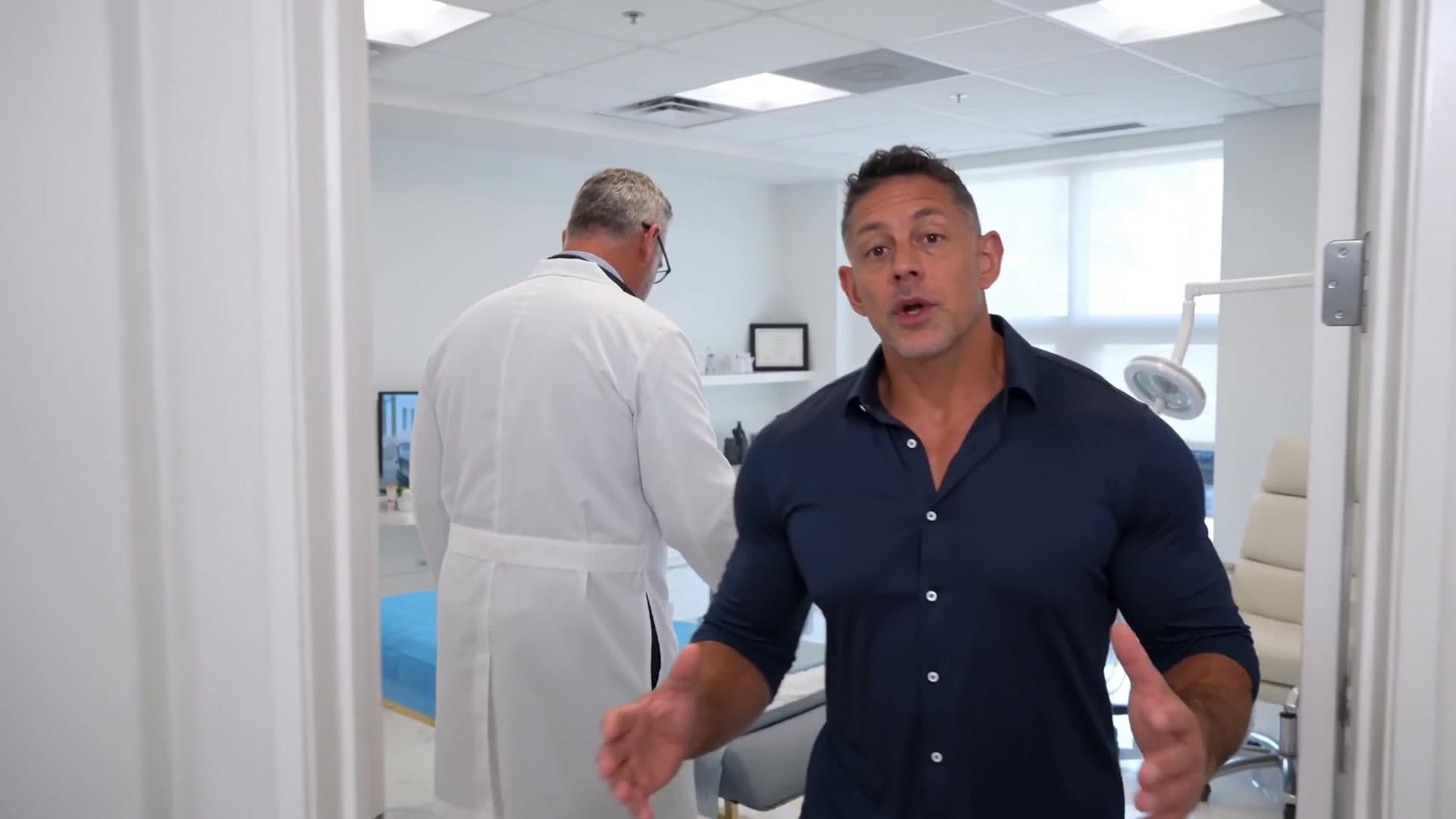
Founder-led — Mike works your market directly
What we report on a TRT Meta program
Bookings, enrollment rate, and branded-search lift.
Bookings on their own undershoot the true program ROI on TRT accounts, because TRT patients who enroll are worth multiples of TRT patients who don't. Branded-search lift is the other leading indicator that the Meta program is working as a demand-creation system, not just a lead generator.
M1
Cost per booked TRT consultation (90-day attribution)
Headline metric. Attributed across 90 days because most TRT bookings take 6-12 weeks from first Meta impression. CRM source-tagging backs up Meta attribution so the number is real.
M2
Consult → enrolled-patient conversion rate
The real revenue metric. Tracked with your clinical team's feedback. Used to tune audience and creative toward the patient profile that actually enrolls, not just books.
M3
Branded-search volume lift
Men who see a TRT Meta ad often don't click — they Google the clinic name a week later. Branded-search volume is the leading indicator that the Meta program is creating demand beyond the direct-click booking count. We track branded "[clinic name] TRT" and "[clinic name] testosterone" monthly.
M4
Creative fatigue cadence
Every TRT creative loses 20-35% CTR per month on the same audience. We track the fatigue curve per asset and rotate ahead of the decline so the program doesn't stall — critical because the retargeting window is 60-90 days and the same creative can't carry that full window.
Illustrative metrics. Individual clinic results vary by market, intake capacity, and baseline. No guaranteed outcomes — standard FTC endorsement disclaimers apply.
Common questions
Answered straight.
Can my local TRT clinic actually compete with Hone, Hims, and Roman on Meta?
On spend, no. On creative authenticity and clinical depth, yes. The national brands each outspend a typical local clinic 50-200x monthly, and they've optimized Meta creative over years of testing. But their ads all sound alike — polished, actor-led, telehealth-pitched. A local clinic with a real provider on camera, explaining his actual approach to monitoring and protocols, cuts through that sameness. Men who've been scrolling online-TRT ads for months respond to someone who looks like a doctor rather than a brand. That's the lane we play in — it's real and it's defensible.
What CAN we say in Meta ad copy about low testosterone symptoms?
You can discuss the symptoms as concepts without addressing the viewer's personal attribute. "What's happening with energy in your 40s" is compliant; "tired all the time?" is not. "The case for checking testosterone levels as men age" is compliant; "are you struggling with low T?" is not. The line is between third-person discussion of the category and second-person address of the viewer. We write the whole library on the compliant side of that line — and the line shifts quarterly, so we re-check with each Meta policy update.
How do you handle before/after content for TRT? There's no visual transformation.
We substitute patient-story content — first-person narratives about energy, training recovery, work performance, and family life, delivered on video by actual (consented) patients with appropriate disclaimers. The arc is narrative, not visual. This is actually an advantage over med spa Meta: you're not navigating the body-zone before/after policy minefield because there's no body-zone image to show. The trade-off is that the creative has to work harder to build the story because it can't lean on a visual shortcut.
What's a typical cost per booked TRT consult on Meta in 2026?
$120-$400 per booked consult is the normal range in our account data, with wide variation by metro. Major metros with saturated online-TRT competition (LA, NYC, Miami, Austin, Dallas) trend toward the higher end as Meta CPMs rise with competition. Secondary metros with less national-brand spend run toward the lower end. Metros with your clinic's name already recognized via organic SEO run meaningfully lower — which is one of the strongest reasons to run Meta and SEO together rather than Meta-only.
Do we need TikTok or YouTube in addition to Meta for TRT?
YouTube is often a strong adjacent channel — particularly YouTube Shorts, which indexes well in the TRT-research ecosystem. TikTok is more hit-or-miss; the TRT audience skews a bit older than TikTok's primary demo but the platform is usable if the creative is right. We're Meta-first for TRT, YouTube-second (particularly Shorts via pre-roll on health/fitness channels), TikTok-optional. Reddit is not a paid channel but is the single biggest source of brand-awareness touches in the research funnel — worth tracking even if you're not advertising there.
Meta keeps rejecting our testosterone creative. Is there anything we can do?
Almost always, yes — it's typically a policy-wording issue rather than a category ban. Common fixes: remove personal-attribute callouts ("low T?" → narrative third-person framing), remove brand-name testosterone products from ad copy (keep on the landing page with disclosures), avoid implied-outcome language ("reclaim your energy" → factual-description framing), make sure the landing page matches the ad copy in compliance posture. We audit rejected creative and rewrite to the rejection reason — most of our rewrites clear on first resubmission.
What's the right budget floor to start a TRT Meta program?
$5,000/mo of media as the minimum viable test; below that, Meta's optimization doesn't get enough signal. Most TRT clinics end up running $10,000-$30,000/mo of Meta spend once the program is ramped, depending on metro competition and how aggressively the clinic is scaling. That's separate from the management retainer. We'll model the specific right-size budget for your clinic on the discovery call based on geographic competition and your consult-to-enrollment economics.
Works even better alongside
Pair this with the organic side of the system.
The paired page
SEO for TRT Clinics
The organic-search side of the TRT program — Map Pack, GBP optimization, transparent pricing content, protocol-comparison pages, and the multi-touch review engine. Pairs directly with the Meta campaign for compounding patient acquisition.
Meta Ads for Anti-Aging Clinics
Facebook & Instagram ads for anti-aging and age management.
See page
Meta Ads for Functional Medicine
Facebook & Instagram ads for functional and integrative medicine.
See page
Meta Ads for Longevity Clinics
Facebook & Instagram ads for longevity, peptide, and IV therapy.
See page
Ready to compete with Hone and Hims on creative quality, not ad spend?
Book a 30-minute discovery call. We'll pull the TRT ads running in your geo from Meta's ad library, show you where your clinic's advantage is, and map a creative approach for your provider — whether you hire us or not.